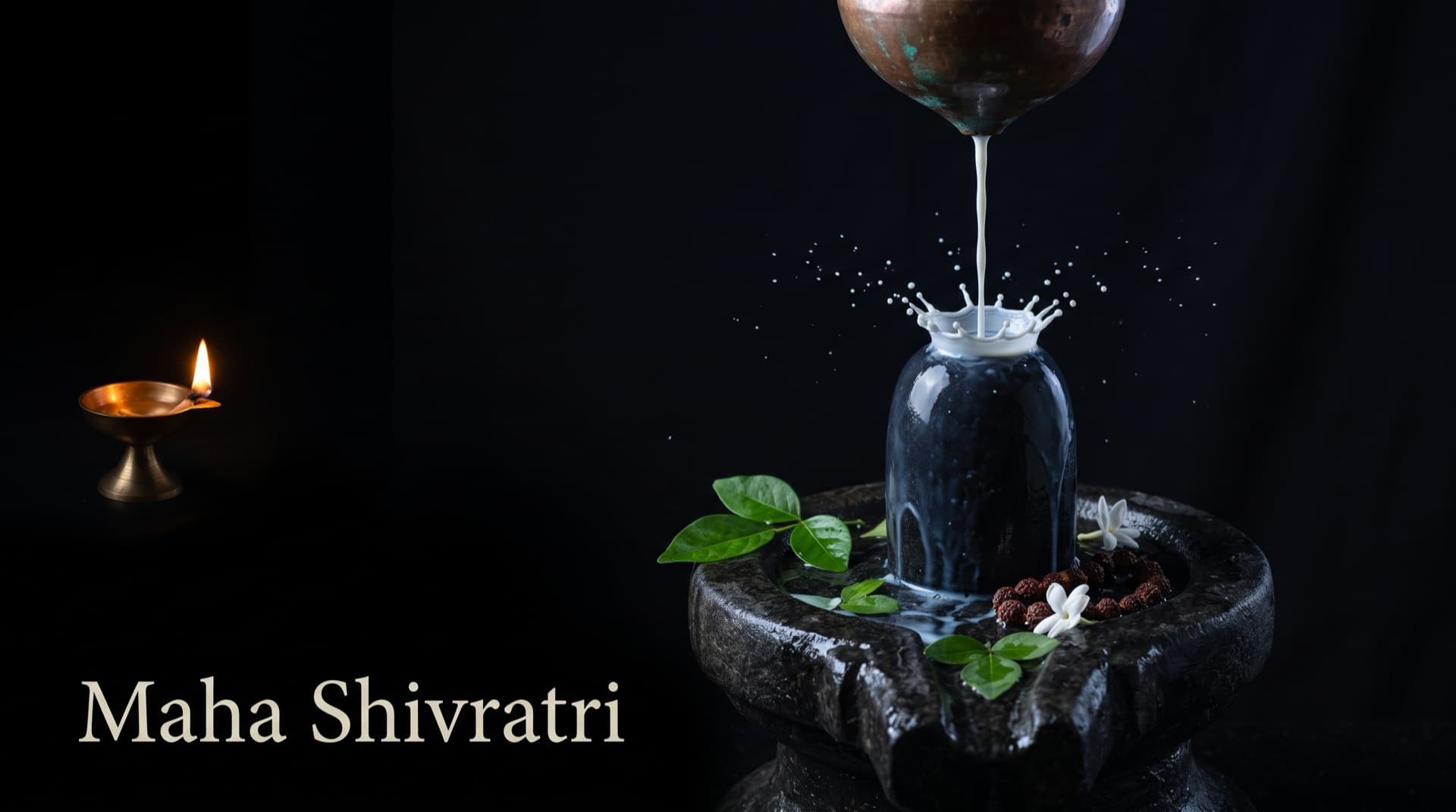
Maha Shivratri vs Masik Shivratri: Rituals, Midnight Abhisheka & Mantras
Understand the difference between monthly Masik Shivratri and annual Maha Shivratri. Learn about Chaturdashi Tithi timing, Nishita Kaal rituals, and spiritual significance.
In Vedic spiritual tradition, Shivratri ("The Great Night of Shiva") is a sacred period dedicated to awakening higher spiritual consciousness, self-discipline, and inner stillness.
While millions of people celebrate the grand annual festival of Maha Shivratri, many are unaware that Masik Shivratri (Monthly Shivratri) is observed every single lunar month on the Krishna Paksha Chaturdashi Tithi (14th waning lunar day).
Understanding the relationship between Masik Shivratri and Maha Shivratri allows seekers to maintain a consistent monthly spiritual discipline.
Comparing Maha Shivratri & Masik Shivratri
| Feature | Masik Shivratri (Monthly) | Maha Shivratri (Annual) |
|---|---|---|
| Frequency | Occurs 12 times a year (every lunar month). | Occurs once a year in the month of Phalguna (Feb/March). |
| Tithi Timing | Krishna Paksha Chaturdashi Tithi. | Phalguna Krishna Paksha Chaturdashi Tithi. |
| Cosmic Significance | Monthly alignment of solar-lunar energy for spiritual detox. | The cosmic night Lord Shiva performed Tandava & united with Shakti. |
| Core Practice | Day fast, evening Puja, chanting Shiva Mantras. | Night-long vigil (Jagran), 4-Prahar Puja, Nishita Kaal Abhisheka. |
Why the 14th Waning Lunar Day (Chaturdashi)?
On the 14th day of the waning moon (Krishna Paksha Chaturdashi), the Moon's visible disk is reduced to a sliver (only ~1% visible).
In Vedic symbolism:
- The Moon represents the Mind (Manas).
- When the Moon is almost completely absent, mental distractions, subconscious desires, and egoic chatter reach their lowest ebb.
- This creates the ideal cosmic window to dissolve the ego into Lord Shiva (pure unmanifest consciousness) through meditation and mantra chanting.
Four Prahars of Night Worship (Prahar Puja)
During Shivratri night, the 12-hour period from sunset to sunrise is divided into 4 equal Prahars (each lasting approximately 3 hours):
- First Prahar (Evening): Perform Abhisheka with pure water / milk; offer lotus flowers and Belpatra.
- Second Prahar (Late Night): Perform Abhisheka with curd and sandalwood paste; chant Om Namah Shivaya.
- Third Prahar (Nishita Kaal / Midnight): Perform Abhisheka with ghee and honey; deep meditation window.
- Fourth Prahar (Pre-Dawn): Perform Abhisheka with sugarcane juice (Ganna Ras); prepare for morning Parana.
Shiva Mantras for Daily & Shivratri Chanting
1. Panchakshari Mantra: Om Namah Shivaya
2. Rudra Gayatri Mantra: Om Tatpurushaya Vidmahe Mahadevaya Dhimahi Tanno Rudrah Prachodayat
3. Maha Mrityunjaya Mantra: Om Tryambakam Yajamahe Sugandhim Pushti-Vardhanam...
Chanting these sacred sound vibrations during Nishita Kaal restores emotional tranquility and builds deep mental strength.
Use AstroGnani to track monthly Masik Shivratri dates and location-based Nishita Kaal Abhisheka timings!
Have questions about your own Kundli?
Talk or chat directly with AstroGnani AI in 10 Indian languages. Get accurate insights grounded in your date, time, and place of birth.
Related Vedic Guides
Divisional Charts (D-Charts)
D60 Shastiamsha Chart: Past Life Karma, Micro-Destiny & Root Cause Analysis
Master the D60 Shastiamsha chart in Vedic Astrology. Learn why Maharishi Parashara rated D60 supreme for evaluating past life karma, twin charts, and root destiny.
Read articleDivisional Charts (D-Charts)
D9 Navamsha Chart: The Soul Blueprint, Marriage & True Planetary Strength
Master the D9 Navamsha chart in Vedic Astrology. Learn why D9 is called the chart of the soul, predicting spouse traits, marriage timing, and Vargottama planets.
Read articleFestivals & Vrats
Ekadashi Vrat Guide: Spiritual Significance, Fasting Rules & Scientific Benefits
Everything you need to know about Ekadashi fasting. Understand its spiritual significance in Vedic tradition, fasting rules, Parana timing, and health benefits.
Read article