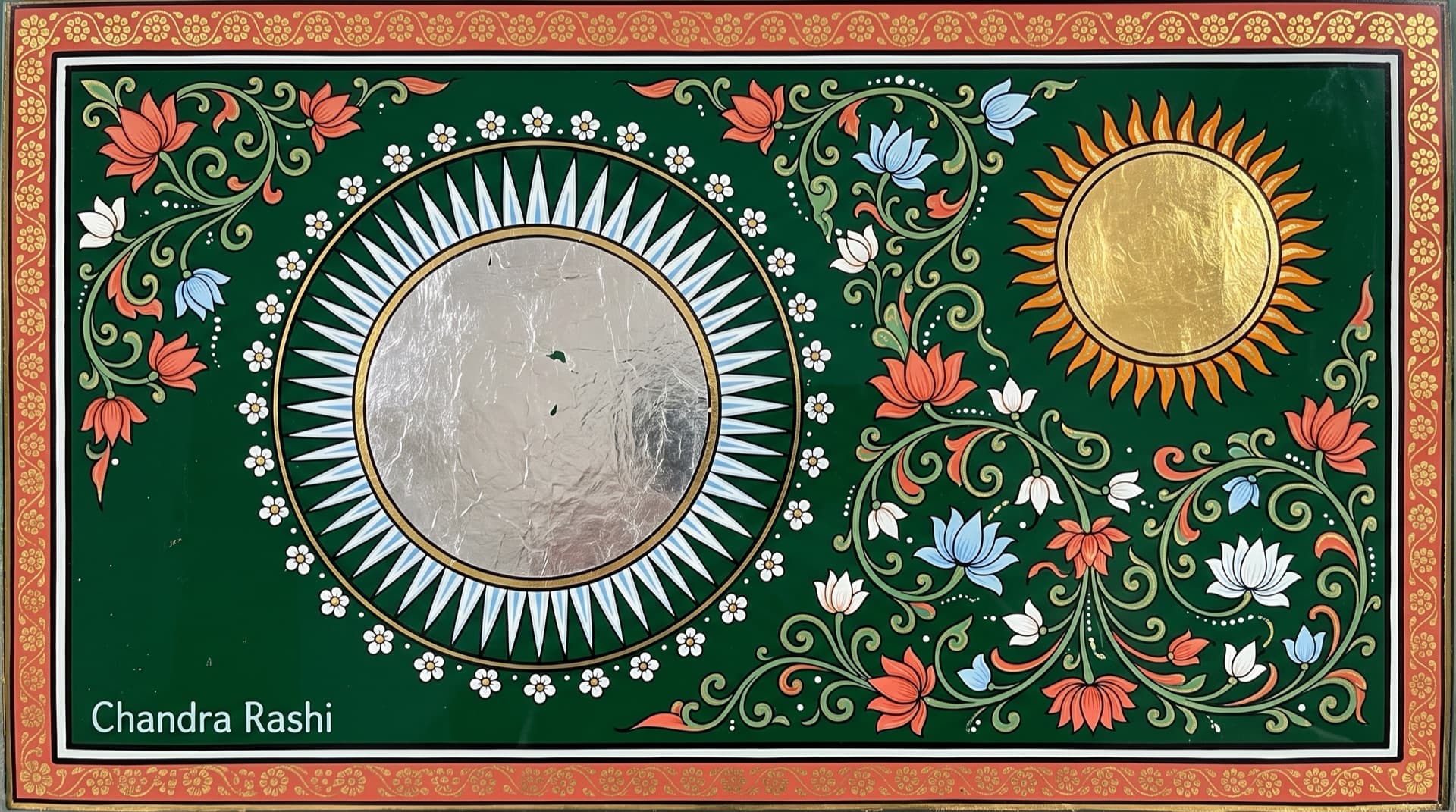
Vedic Moon Sign vs Western Sun Sign: Why Chandra Rashi Shapes Destiny
Why is Moon Sign (Chandra Rashi) primary in Vedic Astrology? Compare Sidereal Moon Sign vs Tropical Sun Sign, emotional processing, and Gochara transit predictions.
If you have ever read a popular Western newspaper horoscope based on your birth month and felt it didn't quite reflect your actual inner emotional life, you are not alone.
In classical Vedic Astrology (Jyotish), primary astrological readings, daily horoscopes, and transit predictions are never calculated from your Western Sun sign. Instead, Jyotish gives supreme priority to your Vedic Moon Sign (Chandra Rashi) and Ascendant sign (Lagna).
1. The Astronomical Difference: Sidereal vs. Tropical Zodiac
The first major reason your Vedic Moon sign differs from Western astrology is the choice of celestial zodiac coordinate systems:
Western Astrology  ──> Tropical Zodiac (Anchored to Earth's Equinoxes & Seasons)
Vedic Astrology    ──> Sidereal Zodiac (Anchored to Fixed Stars & Nakshatras)
Due to the Earth's slow axial precession (a ~25,772-year wobble called Ayanamsha), the tropical zodiac has drifted approximately 24 degrees away from the actual physical constellations in the sky!
When a Vedic astrologer looks up at the sky at your moment of birth using the Sidereal Zodiac (Nirayana), your Moon and planets are mapped to their true astronomical positions against the fixed stars (Nakshatras). This is why your Vedic Moon sign is usually positioned one sign prior to its Western counterpart.
2. Mind vs. Ego: The Moon (Chandra) in Jyotish
In Vedic philosophy, the Sun (Surya) represents the Atma (Soul, Ego, Public Identity), while the Moon (Chandra) represents the Manas (Mind, Emotional Processing, Subconscious Instincts, Mental Resilience).
Why is the Moon given top billing for personal predictions?
Daily Lived Experience: While the Sun stays in a single zodiac sign for an entire month (~30 days), the Moon moves rapidly, traversing a sign every 2.25 days. The Moon's fast movement reflects the daily shifts in human emotions, mental mood, and immediate reactions.
Dasha Sequence Anchor: In Vedic astrology, your entire life timeline — the 120-year Vimshottari Dasha system — is calculated entirely from the Moon's exact Nakshatra position at birth!
Gochara Transit Basis: Planetary transits (Gochara) of slow-moving planets like Saturn, Jupiter, Rahu, and Ketu are measured relative to your natal Moon Sign, dictating periods of emotional growth, financial gains, or Sade Sati.
Comparison Summary Table
| Metric | Western Sun Sign | Vedic Moon Sign (Chandra Rashi) |
|---|---|---|
| Zodiac System | Tropical Zodiac | Sidereal Zodiac (Nirayana) |
| Primary Celestial Body | Sun (Surya) | Moon (Chandra) |
| Movement Speed | ~30 days per sign | ~2.25 days per sign |
| Governing Aspect | Outer Ego, Soul, Career Pride | Inner Mind (Manas), Emotions, Subconscious |
| Life Timeline Role | General personality archetypes | Dictates Vimshottari Dasha & Gochara Transits |
Discover your authentic Vedic Moon Sign and Ascendant by entering your birth details into AstroGnani!
Have questions about your own Kundli?
Talk or chat directly with AstroGnani AI in 10 Indian languages. Get accurate insights grounded in your date, time, and place of birth.
Related Vedic Guides
Divisional Charts (D-Charts)
D60 Shastiamsha Chart: Past Life Karma, Micro-Destiny & Root Cause Analysis
Master the D60 Shastiamsha chart in Vedic Astrology. Learn why Maharishi Parashara rated D60 supreme for evaluating past life karma, twin charts, and root destiny.
Read articleDivisional Charts (D-Charts)
D9 Navamsha Chart: The Soul Blueprint, Marriage & True Planetary Strength
Master the D9 Navamsha chart in Vedic Astrology. Learn why D9 is called the chart of the soul, predicting spouse traits, marriage timing, and Vargottama planets.
Read articleZodiac & Horoscopes
Jupiter Transit 2026: Predictions & Opportunities for All 12 Moon Signs
Discover the major Jupiter Gochara impact across all 12 Moon Signs (Rashis) in 2026. Learn where financial luck, career growth, and relationships expand.
Read article