Shri Satyanarayan Vrat Vidhi: Purnima Rituals, Samagri & Home Harmony
Learn how to perform Shri Satyanarayan Pooja at home. Understand Purnima Tithi timing, required Samagri, step-by-step Vidhi, Panjiri Prasadam, and benefits.
Among the most popular and beloved family rituals in Indian culture, Shri Satyanarayan Pooja holds a special place. Dedicated to Lord Satyanarayan (the embodiment of Supreme Truth and an avatar of Lord Vishnu), this ritual is performed to express gratitude, invite family harmony, celebrate milestone occasions, and cultivate peace.
The beauty of the Satyanarayan Pooja lies in its simplicity — it does not require complex elaborate temple infrastructure and can be easily conducted in any home on Purnima (Full Moon), Sankranti, or special life milestones (housewarming, weddings, career promotions).
Ideal Days for Shri Satyanarayan Pooja
While Satyanarayan Pooja can be conducted on any day filled with devotion, certain astronomical days enhance spiritual resonance:
- Purnima Tithi (Full Moon): The most auspicious monthly day when lunar light reaches 100% capacity, symbolizing abundance and mental clarity.
- Sankranti Days: Solar transit days when the Sun moves into a new zodiac sign.
- Milestone Celebrations: Griha Pravesh, child birth, marriage anniversaries, buying a new home, or starting a business.
Required Pooja Samagri (Essential Checklist)
To perform Shri Satyanarayan Pooja smoothly, gather these traditional items:
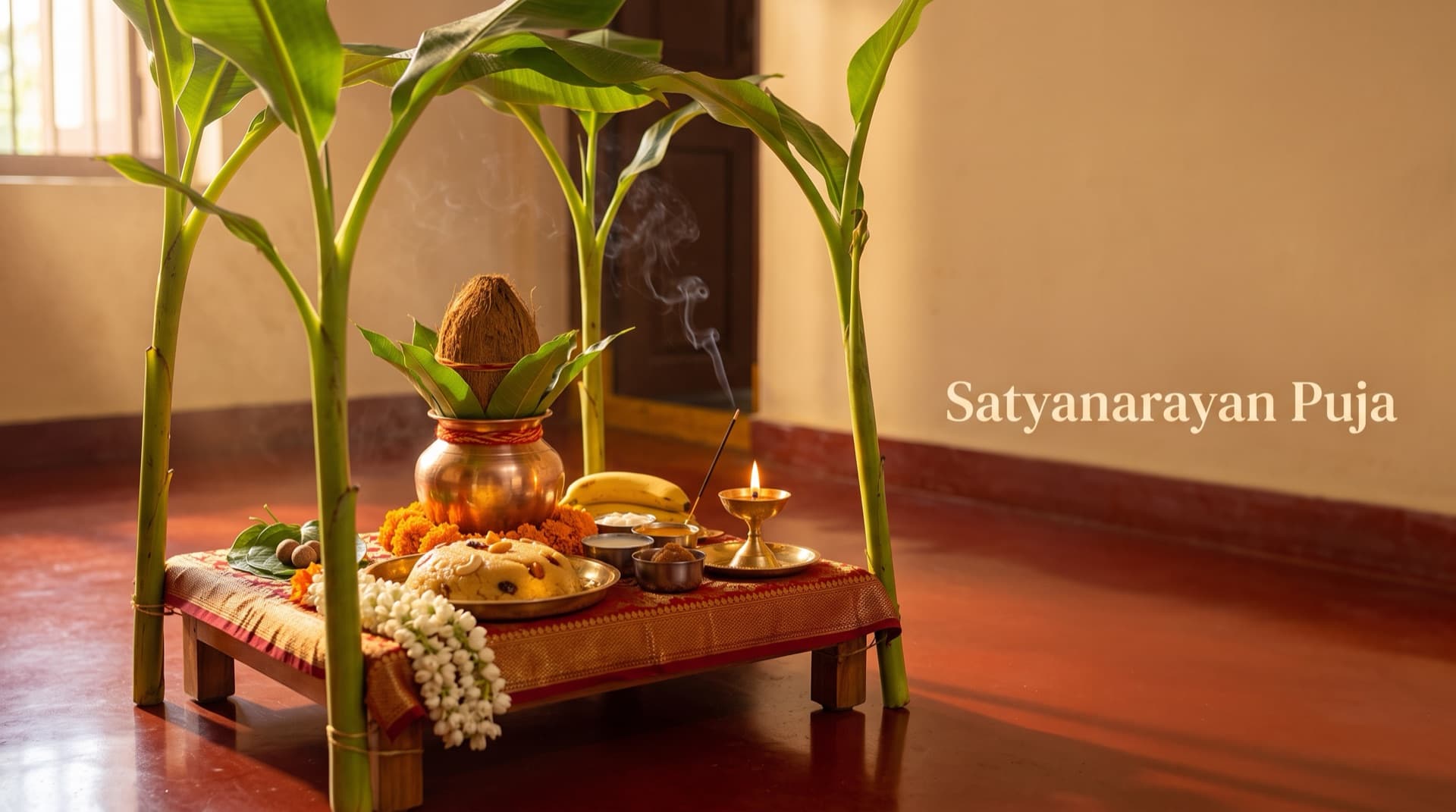
1. Sacred Idol & Mandap Setup:
- Photo or Idol of Lord Satyanarayan / Lord Vishnu
- Wooden platform (Chowki) covered with a clean red or yellow cloth
- Fresh mango leaves (Toran) and banana sapling trunks for Mandap pillars
- Copper Kalash filled with clean water, coin, and betel nut (Supari)
2. Puja Offering Items:
- Tulsi leaves (Tulsi Dal — mandatory for Lord Vishnu)
- Yellow flowers, sandalwood paste (Chandan), kumkum, turmeric
- Incense sticks (Agarbatti), camphor (Kapur), ghee lamp (Diya)
- Panchamrit (blend of milk, curd, honey, sugar, and ghee)
3. Prasadam (Wheat Panjiri):
- Roasted wheat flour (Atta) mixed with ghee, sugar/jaggery, chopped bananas, dry fruits, and fresh Tulsi leaves.
Step-by-Step Pooja Vidhi Outline
Ganesh Pujan ──> Navagraha Pujan ──> Kalash Sthapana ──> Satyanarayan Katha ──> Aarti & Prasadam
Sankalpa & Ganesha Pujan: Begin by invoking Lord Ganesha to remove all obstacles from the ceremony.
Navagraha & Lokpal Pujan: Offer prayers to the nine planetary lords (Navagrahas) to ensure energetic balance.
Satyanarayan Abhisheka & Archana: Bathe the idol/saligram with Panchamrit and water, apply Chandan, offer Tulsi leaves, and recite the 108 names of Lord Vishnu.
Reciting the 5 Chapters of Satyanarayan Katha: Listen attentively to the five chapters (Adhyays) of the Satyanarayan Katha from the Skanda Purana, which illustrate the power of truth, humility, and gratitude.
Aarti & Prasadam Distribution: Perform the grand Aarti with camphor and distribute the delicious wheat Panjiri prasadam to all family members and guests.
Core Spiritual Lesson
The central message of Shri Satyanarayan Pooja is simple yet profound: Truth (Satya) is the highest divine law. Living with honesty, expressing gratitude for blessings, and sharing food with community invites divine grace into your home.
Check AstroGnani to track upcoming Purnima Tithis and Shubh Muhurta windows for your family Satyanarayan Pooja!
Have questions about your own Kundli?
Talk or chat directly with AstroGnani AI in 10 Indian languages. Get accurate insights grounded in your date, time, and place of birth.
Related Vedic Guides
Divisional Charts (D-Charts)
D60 Shastiamsha Chart: Past Life Karma, Micro-Destiny & Root Cause Analysis
Master the D60 Shastiamsha chart in Vedic Astrology. Learn why Maharishi Parashara rated D60 supreme for evaluating past life karma, twin charts, and root destiny.
Read articleDivisional Charts (D-Charts)
D9 Navamsha Chart: The Soul Blueprint, Marriage & True Planetary Strength
Master the D9 Navamsha chart in Vedic Astrology. Learn why D9 is called the chart of the soul, predicting spouse traits, marriage timing, and Vargottama planets.
Read articleFestivals & Vrats
Ekadashi Vrat Guide: Spiritual Significance, Fasting Rules & Scientific Benefits
Everything you need to know about Ekadashi fasting. Understand its spiritual significance in Vedic tradition, fasting rules, Parana timing, and health benefits.
Read article